
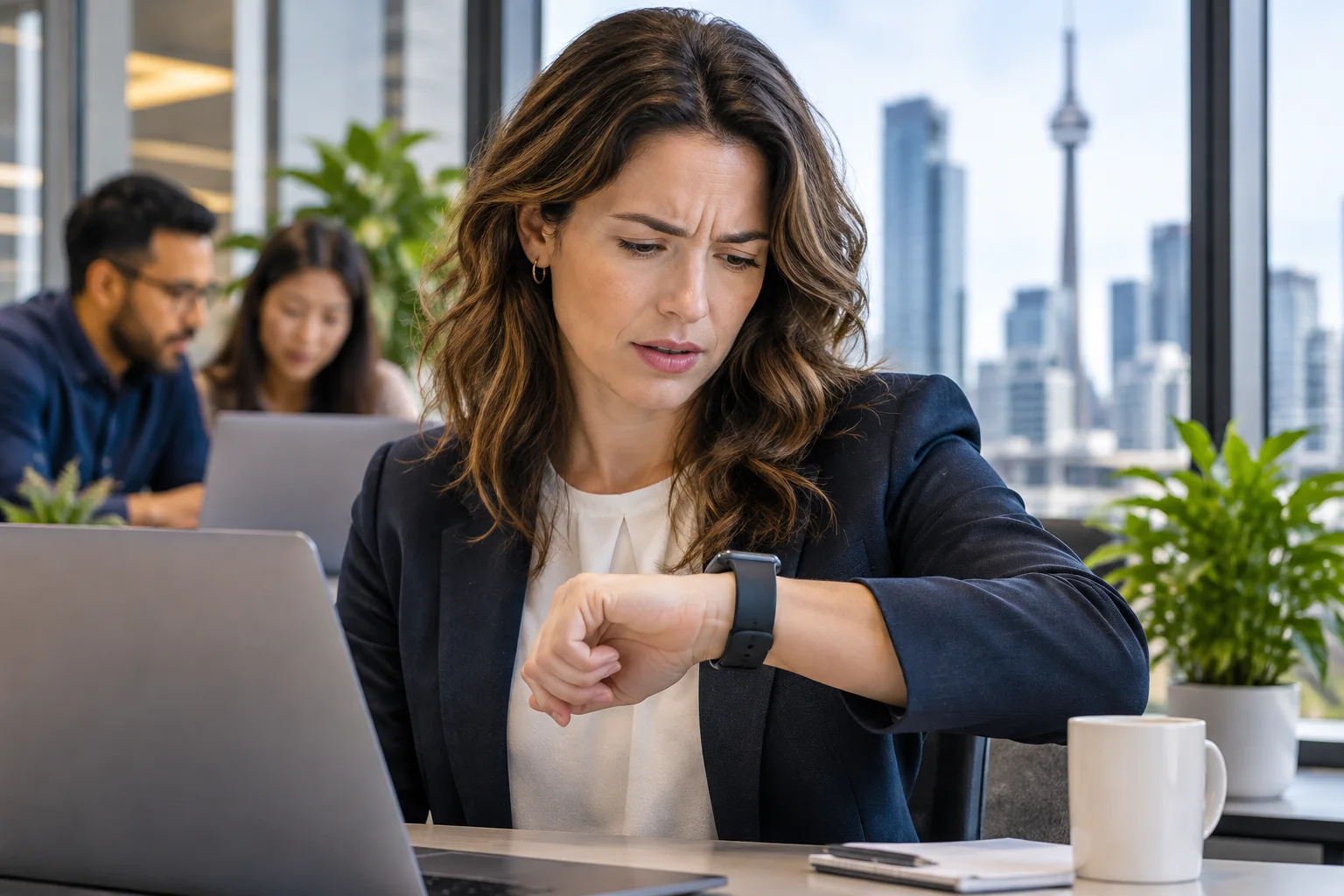
An unusually high or low smartwatch heart-rate reading has two main explanations: your pulse changed, or the watch had trouble measuring it. A high reading after climbing stairs may reflect exertion; a sudden jump while typing may be a measurement error. The number alone cannot tell you which. Start with how you feel, then consider what you were doing and whether the reading persists. If you have chest pain, severe shortness of breath or feel like you may faint, call 911 in Canada. Do not wait for a second reading or let a normal-looking result delay care.
How a smartwatch measures heart rate
Most smartwatches use an optical sensor for routine heart-rate readings. LEDs on the back of the watch shine light into the skin. As blood volume in the wrist changes with each pulse, the amount of light reflected back to the sensor changes slightly. Software identifies the repeating pattern and estimates a rate in beats per minute (bpm). The watch is measuring a pulse signal at your wrist, not directly counting the heart's electrical signals.
That distinction matters when the watch moves or the signal is weak. Software may interpret repetitive movement as extra beats, miss actual pulses or take time to catch up when your rate changes quickly. Also, a watch face may show the most recent background measurement rather than a live reading. Check the timestamp before assuming the number on screen describes what is happening now.
Why a smartwatch reading can be unusually high
For many adults, a resting heart rate is typically 60 to 100 bpm. Resting means calm and at rest, not seated moments after rushing to a meeting. Exercise, stress, pain, fever and dehydration can all raise your actual pulse. Caffeine and some medications can also affect it. A reading above your usual rate is more informative when you know whether you were resting and whether it settled afterward.
Movement can also produce a falsely high estimate. During a brisk walk, for example, a loose watch can shift against your skin with each step. The sensor may pick up that rhythm instead of your pulse. A heart-rate graph that jumps abruptly and tracks your step rate is a reason to check the fit and repeat the measurement while still, not proof that the watch was wrong.
Why a smartwatch reading can be unusually low
Heart rate commonly falls during sleep, and physically fit adults may have a resting pulse below 60 bpm. Some prescribed medicines, including beta blockers, can slow heart rate. A low overnight reading that is typical for you is a different situation from a new low reading while awake, particularly if you feel dizzy, weak or unusually tired. Do not change your medication based on a wearable reading; ask the prescribing clinician about it.
A weak optical signal can make a normal pulse appear slow if the watch misses beats. Cold conditions can reduce blood flow near the skin, making the pulse harder to detect at the wrist. A sensor sitting on the wrist bone or losing contact when you bend your wrist can also give inconsistent results. These issues do not always produce a low number; sometimes they cause gaps in the record instead.
How to check an unexpected reading
If you feel well and it is safe to stop what you are doing, use a short, consistent check rather than repeatedly refreshing the screen:
- Establish the context. Note the time, your activity and any symptoms. If you want a resting measurement, sit quietly for several minutes first. After exercise, remember that your pulse may already be falling by the time you check it again.
- Check sensor contact. Follow the manufacturer's placement instructions. For many watches, a snug fit just above the wrist bone works better than wearing the band over the joint. The watch should not slide, but the band should not feel restrictive. Wipe the sensor clean and dry.
- Take a fresh measurement. Open the heart-rate feature, support your forearm and keep your wrist still until the reading finishes. Compare it with your usual readings under similar conditions, not with someone else's resting rate.
- Compare with a manual pulse. Place your index and middle fingers lightly on the thumb side of the opposite wrist. Count the pulses for a full 60 seconds. Note whether the rhythm feels regular. A manual count is a useful cross-check, not a test that rules out a heart problem.
When to contact a healthcare professional
Seek medical advice if an unexpectedly high or low rate persists at rest, keeps recurring or is accompanied by symptoms. A new irregular pulse also deserves medical attention, even if the average bpm looks ordinary. Record the time, duration, symptoms and manual count if available. A screenshot with the timestamp and a note such as 'seated before lunch' gives a clinician more context than an isolated number. A smartwatch cannot diagnose the cause, and the absence of an alert does not rule out a medical issue.
What a workplace IT team can help with
If an employee sees an old reading on a company-managed phone, first distinguish a measurement issue from a sync issue. If the watch shows a fresh timestamp but the phone app does not, investigate pairing, app permissions and device-management restrictions. Changing a phone setting might resolve a delayed display; it will not establish whether the pulse itself is normal.
Keep health information out of routine support tickets. For a sync problem, IT usually needs the device model, software version, last successful sync time and any error message, not a screenshot of the employee's heart-rate history. Checking only the permissions needed for the approved app helps restore productivity without weakening security or exposing unnecessary personal data.
For Toronto and GTA employers introducing wearables, TASProvider offers business IT support and IT consulting on device policies, secure connectivity and app access. Contact TASProvider to define what your help desk can troubleshoot, what information it should collect and where its role ends. Leave interpretation of personal health readings to the employee and their healthcare professional.
Lørdag, november 21, 2026
