
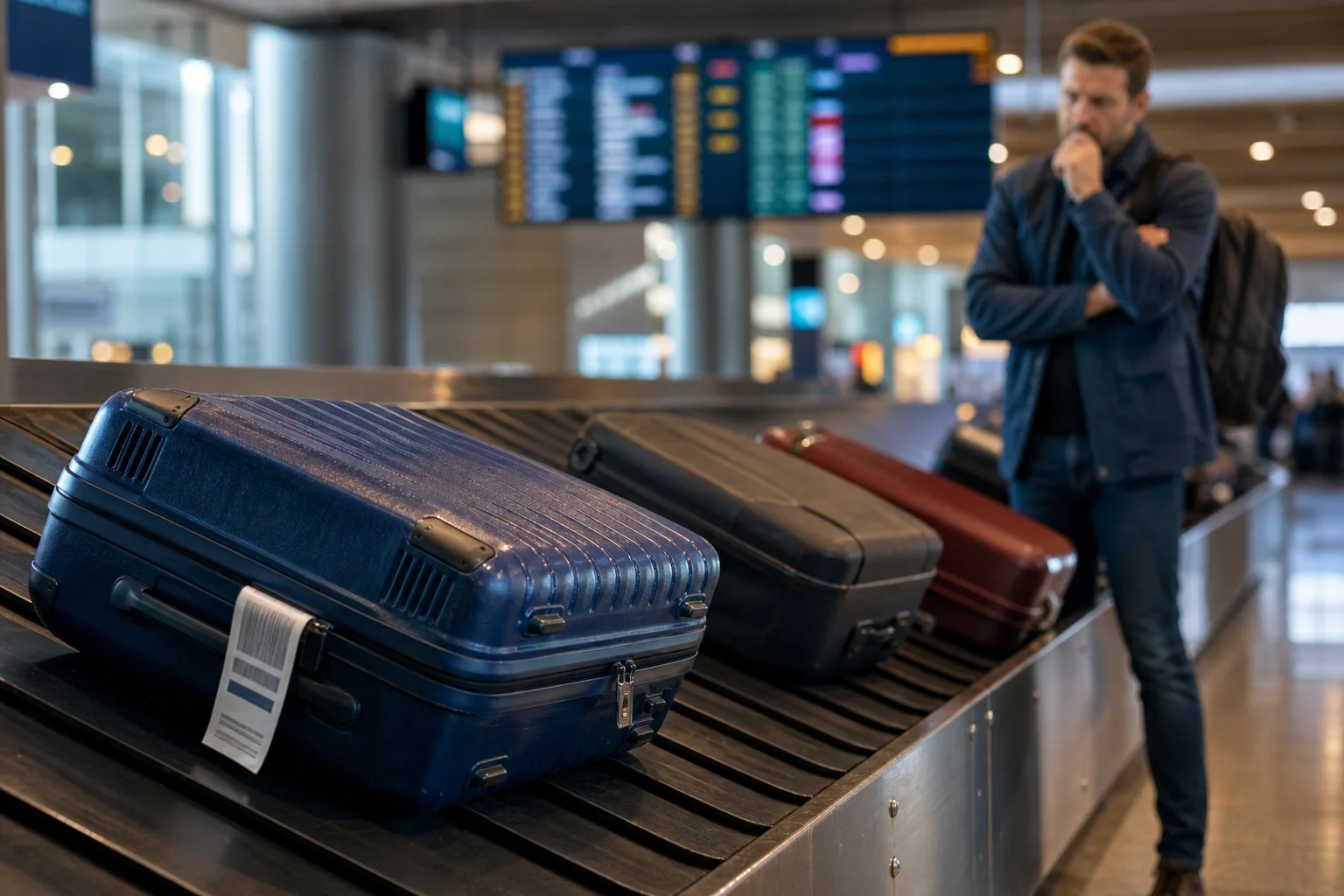
Passengers and checked luggage move through separate airport processes. While a traveller follows boarding passes, security checks, gate agents, and identity controls, a suitcase is routed through baggage tags, scanners, conveyor systems, sorting equipment, and ground-handling teams. Because these workflows are connected but not identical, luggage can travel to the wrong airport even when its owner does not.
Understanding how this happens offers a useful lesson in operational technology: reliable outcomes depend on accurate data, integrated systems, clear procedures, and effective exception handling. These principles apply not only to airports but also to the business IT systems that organizations rely on every day.
Passengers and Bags Follow Different Workflows
After check-in, a passenger typically proceeds through security and reaches the departure gate. Checked baggage enters a separate operational environment behind the scenes. Its route may include:
- A printed baggage tag containing flight and destination information
- Automated or manual tag scanning
- Conveyor belts and baggage sorting systems
- Security screening
- Transfer points between flights or terminals
- Ground-handling teams responsible for loading and unloading
- Baggage reconciliation and tracking processes
The passenger and suitcase are intended to arrive at the same destination, but they do not remain physically connected after check-in. A disruption affecting one workflow may not affect the other. A passenger can miss a connection while the bag continues, or the passenger can board correctly while the bag is delayed or misrouted.
Common Reasons Luggage Travels to the Wrong Airport
Incorrect or Unreadable Baggage Tags
The baggage tag is a critical source of routing information. If it is printed incorrectly, damaged, folded, detached, or obscured, automated scanners may not read it properly. The bag may then require manual handling, increasing the possibility of delay or routing error.
Old tags and barcode stickers can also create confusion. Removing them before a new journey helps ensure that the current routing information is the most visible identifier on the suitcase.
Sorting and Loading Errors
Baggage systems process large numbers of items under strict time constraints. A bag can be placed on the wrong conveyor, loaded onto an incorrect cart, or moved to the wrong aircraft. Automated sorting reduces manual work, but physical handling remains part of many airport operations.
A single error does not always cause permanent loss. Once an airline identifies the bag’s location, it can often redirect it to the intended airport. The inconvenience comes from the passenger and luggage arriving at different times.
Tight or Disrupted Connections
Connecting passengers and their bags require enough time to move between flights. A traveller may reach the next gate quickly, while baggage must travel through unloading, scanning, sorting, security, and reloading processes.
When an inbound flight is late or the connection window is short, the passenger may board while the suitcase remains behind. The reverse can also occur: a bag may already be transferred before a passenger misses the connection.
Last-Minute Gate or Aircraft Changes
Operational changes can alter where passengers and baggage need to go. Gate changes, aircraft substitutions, weather disruptions, and schedule adjustments may require teams and systems to update routing instructions quickly.
If updated information does not reach every part of the baggage-handling process in time, a suitcase may follow the original plan while the passenger follows the revised one. This is an example of a synchronization problem between systems and operational teams.
Similar Destinations or Flight Information
Airport codes, flight numbers, and destination details must be entered and interpreted accurately. A data-entry mistake or incorrectly applied tag can send luggage toward a destination that was never on the passenger’s itinerary.
This risk illustrates why validation is important. Well-designed systems should verify information at multiple stages rather than relying on one entry or scan.
Security or Manual Inspection Delays
A suitcase may be held for additional screening or inspection. If the aircraft departs before the bag is cleared, the passenger can continue without it. The luggage may later be placed on another flight, sometimes through a different airport as part of the recovery route.
Why the Passenger May Not Follow the Bag
Passenger travel includes controls that do not apply to luggage in the same way. Airlines and border authorities may verify identity, travel documents, boarding status, and entry requirements. Bags are identified mainly through their tags and associated records.
For example, a passenger who misses a flight may be rebooked, while the bag’s status depends on when the change is recorded and whether it has already been loaded or transferred. Baggage reconciliation procedures are intended to associate checked items with travellers, but irregular operations can still require bags to be removed, held, or rerouted.
Technology Helps, but Integration Matters
Airport baggage operations depend on multiple technologies and organizations working together. Airline reservation data, check-in systems, baggage databases, scanners, sorting equipment, airport infrastructure, and ground-handling processes must exchange accurate information.
The technology alone is not enough. Reliable operations also require:
- Consistent data across connected systems
- Monitoring that identifies failed scans and routing exceptions
- Redundant processes when equipment or networks are unavailable
- Clear responsibility for investigating unresolved items
- Secure access to operational and passenger information
- Documented recovery procedures for delays and disruptions
These requirements closely resemble the IT challenges faced by small and medium-sized businesses. A company may have reliable applications, networks, cloud platforms, and backups individually, yet still experience disruption when integrations fail or responsibilities are unclear.
Practical Steps Travellers Can Take
Travellers cannot control every part of baggage handling, but several practical measures can make identification and recovery easier:
- Confirm the destination tag: Before leaving the check-in counter, verify that the printed airport code matches the intended destination.
- Keep the baggage receipt: The tag number can help the airline locate and trace a delayed suitcase.
- Remove old routing labels: Clear away previous airline tags and barcode stickers before checking the bag.
- Add contact information: Place contact details inside the suitcase and use a durable external identifier that does not expose unnecessary personal information.
- Allow reasonable connection time: More time between flights gives both the passenger and luggage a better opportunity to complete the transfer process.
- Keep essentials in carry-on baggage: Travel documents, medication, valuables, chargers, and basic necessities should remain accessible, subject to applicable security rules.
- Report missing baggage promptly: Contact the airline’s baggage service desk before leaving the airport and retain the reference information for follow-up.
What Businesses Can Learn from Baggage Routing
Misrouted luggage is a visible example of what happens when data, physical processes, and human decisions fall out of alignment. Businesses face similar risks when customer records do not synchronize, backups are not tested, cloud permissions are inconsistent, or alerts are generated without a clear response process.
Effective business IT support should therefore cover more than individual devices. It should consider the full operational workflow, including cybersecurity, identity management, Microsoft 365 services, cloud IT services, network security, data backup and disaster recovery, and business continuity.
For organizations evaluating managed IT services in Toronto, the important question is not simply whether a provider can fix a computer. A capable managed service provider should understand how technology supports the business, identify dependencies, monitor critical systems, and prepare recovery procedures before a disruption occurs.
Build More Reliable Business Systems with TASProvider
TASProvider helps businesses across Toronto and the GTA improve the security, reliability, and continuity of their technology environments. Our managed IT services, IT consulting, cybersecurity, Microsoft 365 support, cloud infrastructure, and data backup and disaster recovery solutions are designed around real business workflows.
If your organization needs dependable IT support in Toronto or a managed service provider that takes a proactive, business-focused approach, contact TASProvider to discuss your systems, risks, and operational priorities.
lundi, novembre 16, 2026
